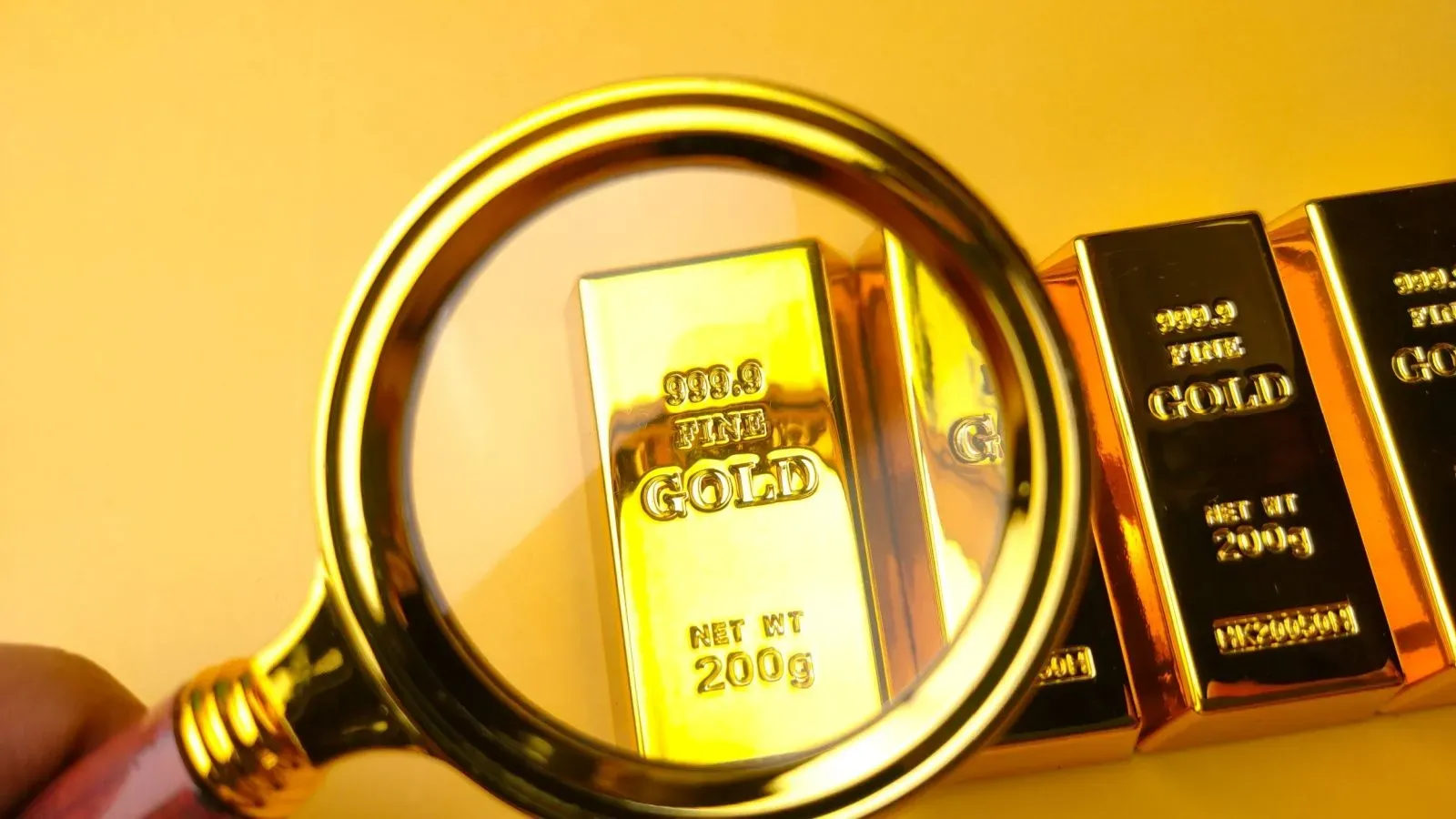
Gold Price Today: Decoding the Market & The Troy Ounce Explained
Understanding the intricacies of the current gold price is crucial for investors, enthusiasts, and anyone monitoring global economic trends. The "Gold Preis Heute" (Gold Price Today) isn't just a number; it's a reflection of complex interactions between supply, demand, economic indicators, and global sentiment. While often seen as a safe haven asset, gold's value fluctuates, influenced by a myriad of factors from geopolitical tensions to the strength of the US dollar. This article delves into what drives the price of gold and clarifies the standard measurement unit – the Troy ounce – that underpins its valuation worldwide.
Decoding the Gold Price Today: What Drives Its Value?
The spot price of gold, which you see quoted live on financial charts, represents the price at which gold can be bought or sold for immediate delivery. This price is determined on wholesale markets and is a dynamic figure, constantly reacting to new information. Unlike fixed-price commodities, gold's value is influenced by a unique blend of monetary, economic, and psychological factors.
One of the most significant drivers of the current gold price is the interplay of **supply and demand**. Gold mining output, recycling efforts, and central bank reserves constitute the supply side, while demand stems from jewelry manufacturing, industrial applications, investment (bars, coins, ETFs), and central bank purchases. A surge in investor demand during times of uncertainty, for example, can quickly push prices higher.
The **strength of the US Dollar** plays a pivotal role, as gold is predominantly traded in US Dollars globally. When the dollar strengthens, gold becomes more expensive for holders of other currencies, potentially dampening demand and pushing its dollar price down. Conversely, a weaker dollar often makes gold more attractive and affordable, leading to price appreciation. This inverse relationship is a cornerstone of understanding gold's daily movements.
Beyond currency fluctuations, several other macroeconomic factors exert considerable influence:
* **Inflation Expectations:** Gold is often considered a hedge against inflation. When investors anticipate rising inflation, they tend to flock to gold to preserve their purchasing power, driving its price up.
* **Interest Rates:** Higher real interest rates (nominal rates minus inflation) increase the opportunity cost of holding non-yielding assets like gold. This can make interest-bearing investments more attractive, diverting capital away from gold and potentially lowering its price.
* **Geopolitical Instability:** Conflicts, political crises, and major global events often trigger a "flight to safety," with investors seeking the perceived security of gold, leading to price spikes.
* **Economic Data:** Key economic indicators from major economies, particularly the United States, such as GDP growth, employment figures, and manufacturing data, can sway investor confidence and, consequently, gold prices.
* **Oil Prices:** While not a direct driver, oil prices can impact gold indirectly. Higher oil prices can signal broader inflationary pressures or increased industrial activity, both of which can influence gold's appeal. Additionally, the cost of extracting gold is tied to energy prices.
It's crucial to remember that the "Gold Preis Heute" you see on a real-time chart is typically a reference point, often an average of numerous wholesale quotes. It doesn't necessarily represent the exact price an individual buyer or seller will receive from a specific bank or dealer, as this will include bid-ask spreads. For a deeper dive into how these live prices are generated and interpreted, you might find our article on
Live Gold Price Today: Understanding Realtime Spot Rates particularly insightful.
The London Fix: How Gold's Benchmark Price is Set
While spot prices are constantly in flux, a globally recognized benchmark known as the LBMA Gold Price (formerly the London Gold Fix) provides a daily reference point for the market. This price is set through an electronic auction process administered by ICE Benchmark Administration (IBA) under the supervision of the London Bullion Market Association (LBMA), involving some of London's largest precious metal banks.
The LBMA Gold Price is established twice a day, usually at 10:30 AM and 3:00 PM London time, on weekdays that are not public holidays in the UK. This mechanism allows participants to buy and sell gold at a single published price, providing transparency and a reliable benchmark for contracts, valuations, and trading across the globe.
Here's a snapshot of the fixing schedule for key precious metals:
* **Gold:** Fixed daily at 10:30 AM and 3:00 PM London time.
* **Silver:** Fixed daily at 12:00 PM London time.
* **Platinum & Palladium:** Fixed daily at 9:45 AM and 2:00 PM London time.
It's important to note that these "fixed" prices are published after the auction concludes, often around midnight for the daily price, and serve as reference points for vast quantities of gold traded globally. However, for retail investors or those needing to execute orders around these times, specific cut-off times are often in place to ensure orders are included in the daily fix. For instance, to secure the afternoon Gold Price, orders typically need to be placed by 2:35 PM London time. On weekends and UK public holidays, no official LBMA Gold Price is published.
This fixing process, despite the constant movement of spot prices, serves a vital function in providing market stability and a standardized reference for a diverse range of participants, from mining companies to central banks. To learn more about the mechanics and historical significance of this benchmark, our dedicated article on
How Gold Price is Set Daily: London Fix & Trading Hours offers a comprehensive overview.
The Troy Ounce vs. the Avoirdupois Ounce: Understanding Gold's Weight
When discussing the "Gold Preis Heute," you'll invariably encounter the term "ounce." However, not all ounces are created equal, especially in the world of precious metals. The standard international weight measure for gold, silver, platinum, and other noble metals is the **Troy ounce**, officially abbreviated as **oz t** or often simply referred to as a "fine ounce."
A single Troy ounce weighs approximately **31.103 grams** (exactly 31.1034768 grams). This precise measurement is critical for valuing precious metals accurately, as even slight variations in weight can translate to significant differences in monetary value given gold's high price per unit.
In contrast, the more common "ounce" used for weighing everyday items like groceries in English-speaking countries is the **avoirdupois ounce**, which weighs roughly **28.35 grams**. The distinction is vital for anyone purchasing or investing in gold, as mistaking one for the other could lead to considerable financial misunderstandings. For instance, a commodity quoted per "ounce" of gold is always referring to a Troy ounce, not an avoirdupois ounce.
The term "fine ounce gold" emphasizes that the measurement refers exclusively to the pure precious metal content, disregarding any alloys or impurities. This is particularly relevant when dealing with gold coins or bars that might contain other metals for durability or aesthetic reasons. Take the example of the famous South African Krugerrand. While it weighs nearly 34 grams in total (precisely 33.93 grams), it contains exactly one fine Troy ounce of pure gold. The additional weight comes from a copper alloy, which gives the coin its distinctive reddish hue but does not contribute to its gold value for investment purposes. For investors, only the pure gold content, measured in fine Troy ounces, is relevant for determining the "Gold Preis Heute."
The official international symbol for gold in financial markets, particularly when discussing prices per Troy ounce, is **XAU**. The "AU" in XAU is derived from *Aurum*, the Latin word for gold, and its chemical symbol in the periodic table of elements. This standardized terminology ensures clarity and consistency in global gold trading.
Practical Tips for Gold Investors and Buyers
Navigating the gold market requires more than just knowing the "Gold Preis Heute"; it demands an understanding of market dynamics and practical considerations. Here are some actionable tips for both seasoned and new investors:
* **Track Multiple Sources:** Always cross-reference gold prices from various reputable financial news outlets or bullion dealers. This helps ensure you're getting an accurate picture of the market and can help you identify favorable buying or selling opportunities.
* **Understand the Bid-Ask Spread:** When you buy gold from a dealer, you'll pay the "ask" price, which is slightly higher than the "bid" price at which they'll buy gold from you. This spread is how dealers make their profit. Be aware of it and factor it into your calculations.
* **Consider Physical vs. Digital Gold:**
* **Physical Gold (Bars, Coins):** Offers direct ownership and tangible security. However, it comes with considerations for storage (safe deposit box, home safe), insurance, and potential premiums over the spot price, especially for smaller denominations. Authenticity verification is also crucial.
* **Digital Gold/ETFs (Exchange Traded Funds):** Provides exposure to gold price movements without the complexities of physical storage. These are typically more liquid and can be traded easily. However, you don't own the physical metal directly, and there are management fees.
* **Gold as a Long-Term Investment:** Historically, gold has proven to be a reliable store of value over the long term, acting as a hedge against inflation and economic uncertainty. It's generally not recommended for short-term speculation due to its volatility.
* **Diversify Your Portfolio:** Gold should typically be part of a diversified investment portfolio, not its sole component. Its role is often to reduce overall portfolio risk and act as a safe haven during market downturns. Financial advisors often recommend allocating a small percentage (e.g., 5-15%) of a portfolio to gold.
* **Avoid Market Timing:** Attempting to predict the exact highs and lows of the gold market is incredibly difficult. Instead, consider a dollar-cost averaging strategy (investing a fixed amount regularly) to smooth out price fluctuations over time.
* **Be Aware of Premiums:** When buying physical gold, particularly coins, you'll often pay a premium above the melt value (spot price). This premium covers manufacturing, distribution, and dealer profit. Larger bars generally have lower premiums per ounce.
In conclusion, the "Gold Preis Heute" is a reflection of a dynamic global market influenced by a confluence of economic, monetary, and geopolitical factors. From the intricate process of the LBMA Gold Price setting to the precise measurement of the Troy ounce, understanding these fundamental aspects is key for any individual or institution looking to engage with this timeless asset. Whether as a hedge against inflation, a safe haven during uncertainty, or a strategic diversification tool, gold continues to hold a unique and valued position in the world of finance, symbolizing enduring wealth and stability.